AC problem guide
Noisy AC? Common Sounds & Likely Causes
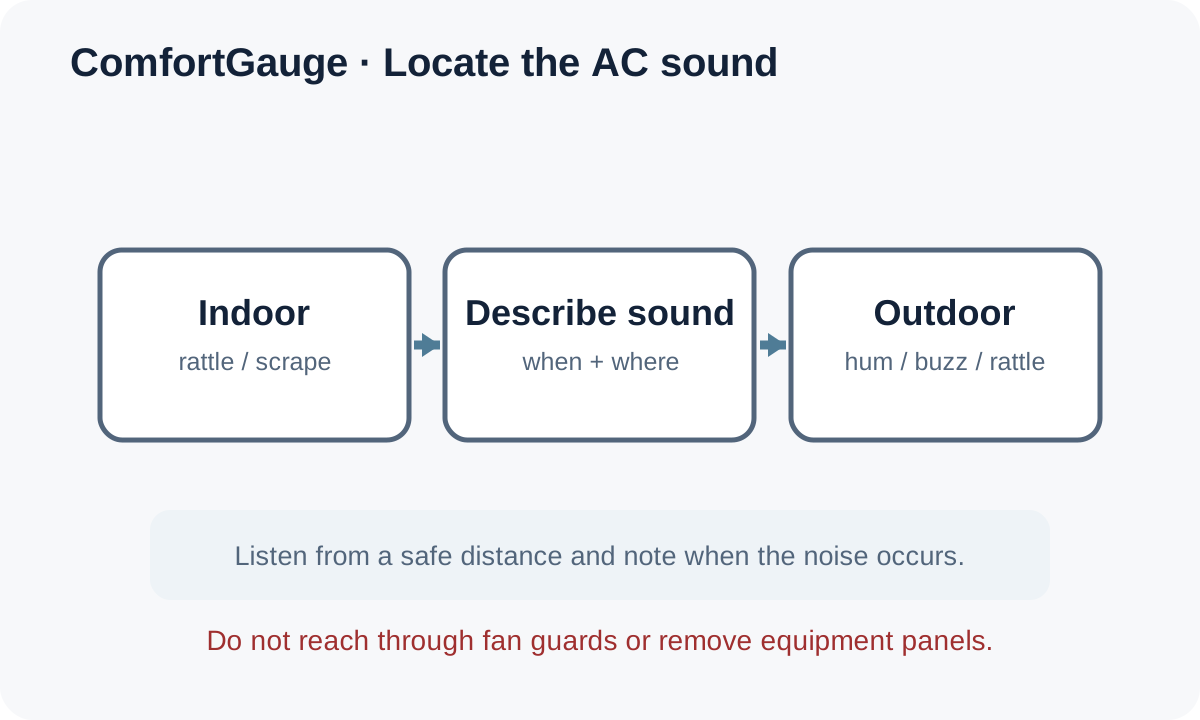
Where a noise comes from and whether it is rattling, scraping, buzzing, or humming can help separate loose components from mechanical or electrical faults.
Immediate safety notes
- Stop the system for electrical arcing, smoke, or a strong burning odor.
- Do not approach moving fan parts or remove equipment panels.
Likely cause categories
ComfortGauge uses these reviewed cause categories as possibilities, not as a confirmed component diagnosis.
- loose or vibrating component
- fan or motor issue
- compressor or refrigerant noise
Safe checks you can make
- Listen from a safe distance and note whether the sound is indoors or outdoors.
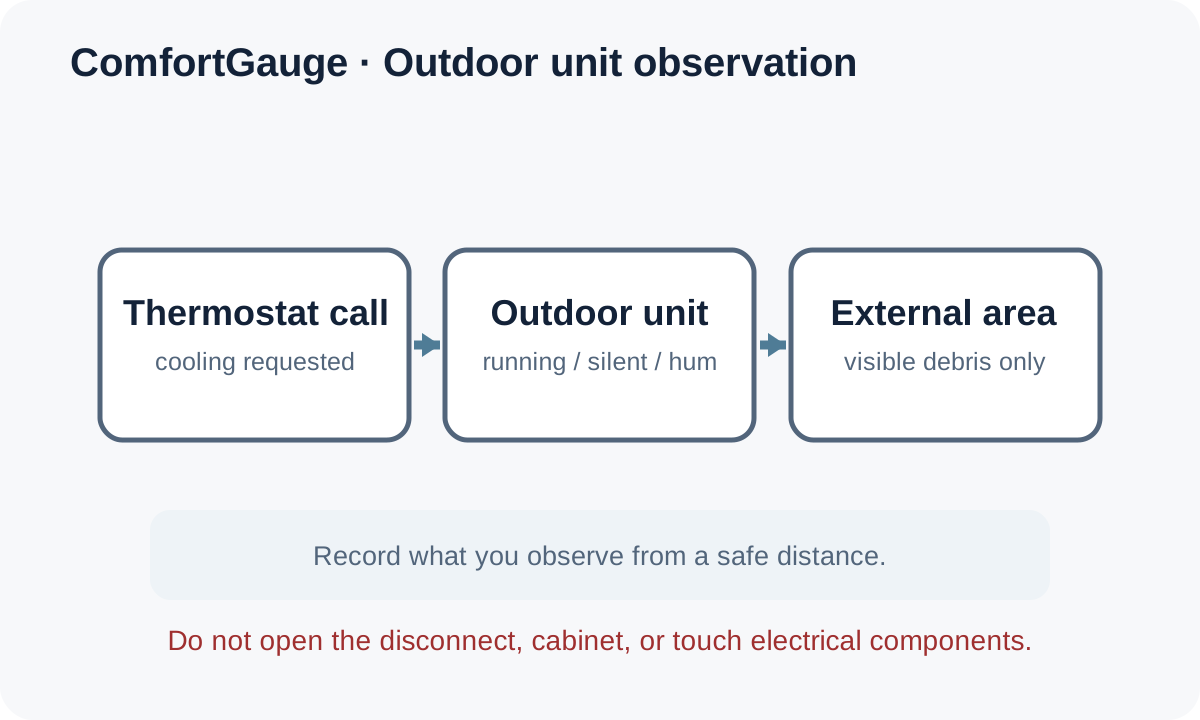
- Look for loose external debris without reaching into the unit.
What not to do
- Do not reach through fan guards.
- Do not open the cabinet to inspect energized or moving parts.
Expected cost context
ComfortGauge does not yet have a reviewed service-specific range for this problem.
Compare written repair scopes and quotes rather than relying on an unsupported estimate.
Repair or replace context
System age, repair cost, repeat failures, comfort, and operating performance matter more together than any single symptom.
Compare repair versus replacement →Frequently asked questions
Is a rattling AC always serious?
Not always, but persistent rattling can indicate a loose or vibrating component and should be evaluated if it continues.
What AC sounds are an immediate stop signal?
Arcing, smoke, or a strong electrical burning odor are stop conditions; shut the system down and arrange professional help.
Can a fan or motor cause grinding or squealing?
Yes. Fan, motor, bearing, and other moving-component problems can create grinding or squealing noises and need professional inspection.