AC problem guide
AC Leaking Water? Condensate Causes & Safe Checks
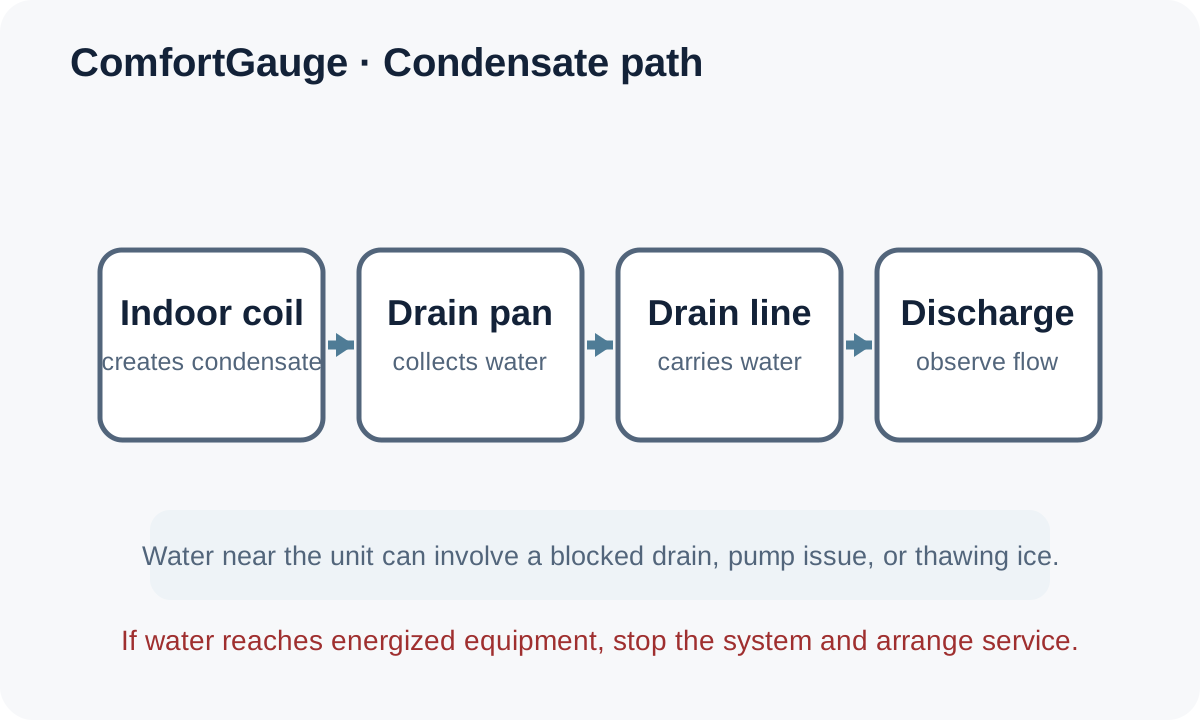
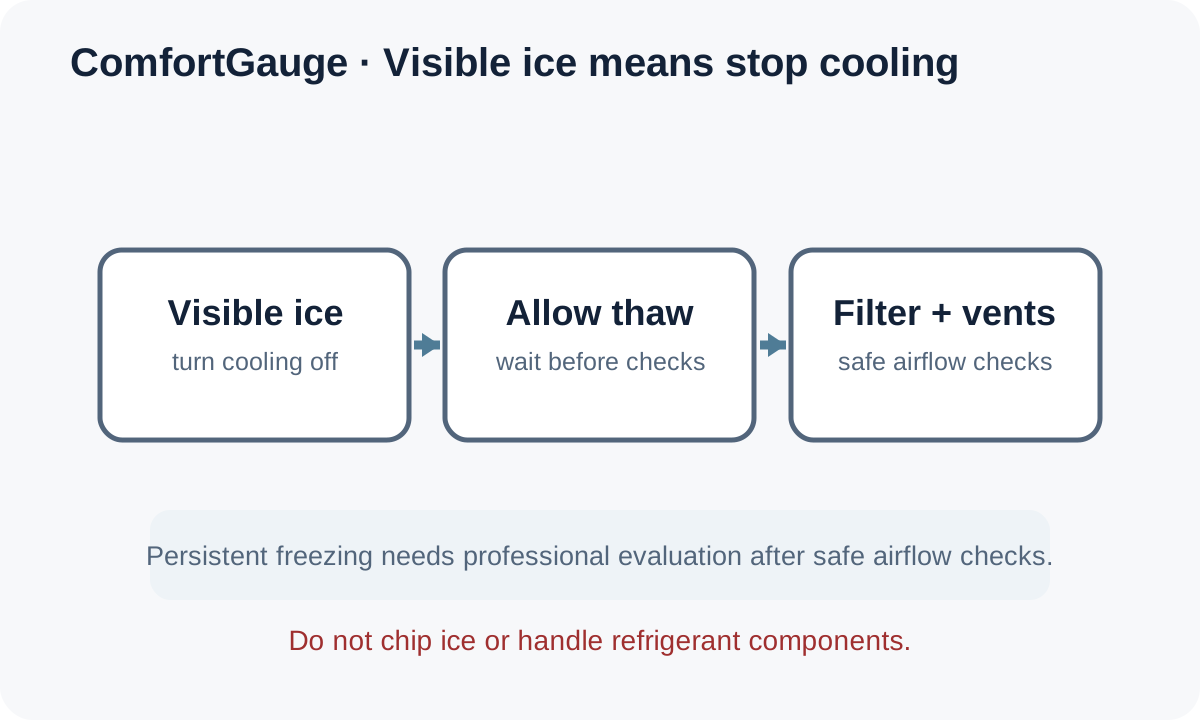
Water near the indoor unit often relates to condensate drainage, but coil icing can also produce excess water as it thaws.
Immediate safety notes
- Keep water away from electrical equipment and stop the system if water reaches energized components.
Likely cause categories
ComfortGauge uses these reviewed cause categories as possibilities, not as a confirmed component diagnosis.
- condensate drain issue
- condensate pump or pan issue
- refrigerant or coil issue
Safe checks you can make
- Observe where the water is collecting.
- Check an accessible condensate outlet for obvious blockage without dismantling equipment.
What not to do
- Do not open electrical compartments near water.
- Do not cut or modify drain or refrigerant lines.
Expected cost context
Reviewed national planning range: $80–$200.
This is a planning range, not a contractor quote. Dataset: ac-repair-cross-source-2026-v1.
Repair or replace context
System age, repair cost, repeat failures, comfort, and operating performance matter more together than any single symptom.
Compare repair versus replacement →Frequently asked questions
Is water near the indoor AC always a refrigerant leak?
No. Central AC systems normally create condensate, and drainage problems are a common reason water appears near the unit.
Can a frozen coil cause water leakage?
Yes. Melting ice can overwhelm or expose a condensate drainage problem.
Should water around an indoor AC unit be ignored?
No. Protect nearby electrical equipment, note where the water appears, and address recurring leakage before it causes damage.