AC problem guide
High AC Energy Bills? Causes & Efficiency Clues
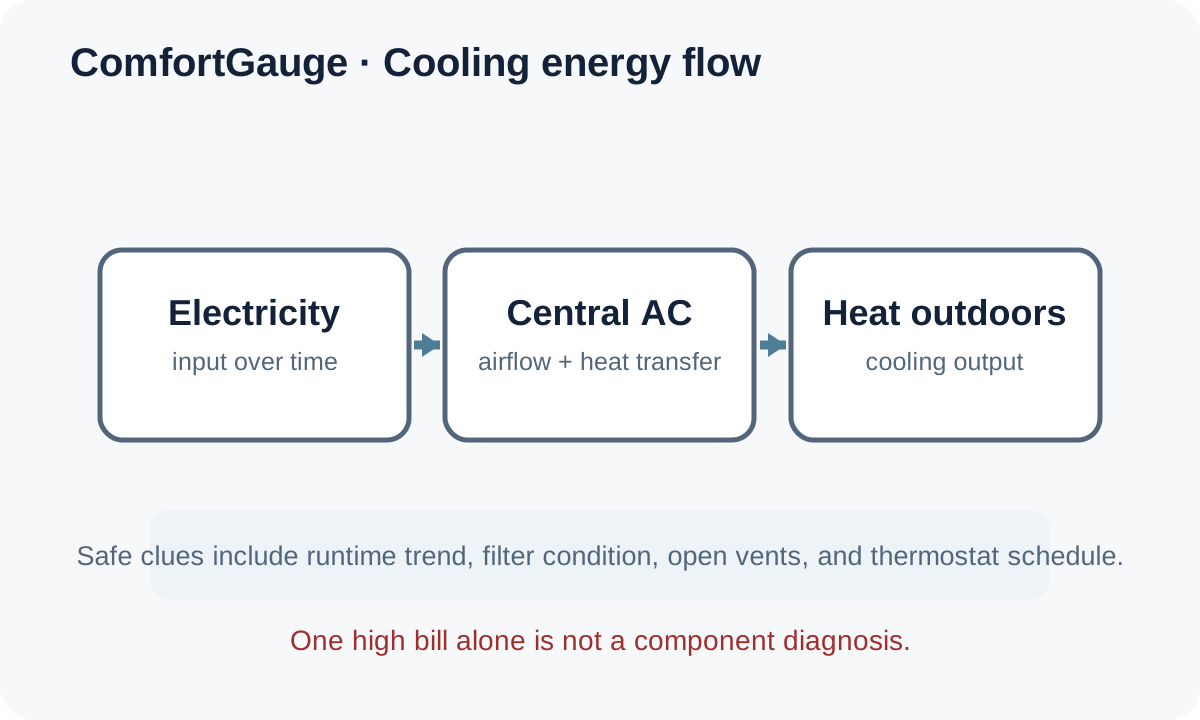
Higher cooling energy use can reflect longer runtime, restricted airflow, degraded performance, control issues, or a change in weather and household demand.
Immediate safety notes
- High energy use alone is not an emergency, but smoke, burning odor, arcing, gas odor, or a carbon-monoxide alarm remains a stop condition.
Likely cause categories
ComfortGauge uses these reviewed cause categories as possibilities, not as a confirmed component diagnosis.
- efficiency or airflow loss
- duct leakage or insulation issue
- refrigerant or coil issue
Safe checks you can make
- Compare recent runtime patterns with similar weather when possible.
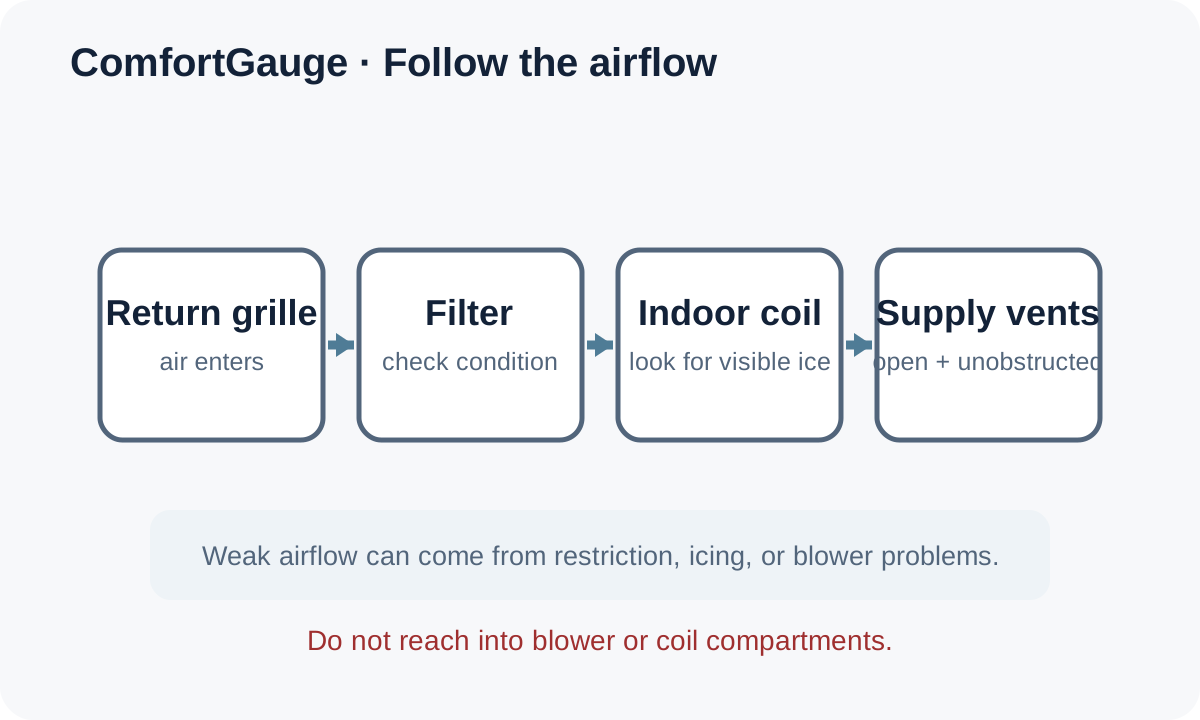
- Check the filter and accessible vents.
- Confirm thermostat schedules and setpoints have not changed.
What not to do
- Do not open electrical panels to measure equipment current.
- Do not adjust refrigerant charge.
Expected cost context
ComfortGauge does not yet have a reviewed service-specific range for this problem.
Compare written repair scopes and quotes rather than relying on an unsupported estimate.
Repair or replace context
System age, repair cost, repeat failures, comfort, and operating performance matter more together than any single symptom.
Compare repair versus replacement →Frequently asked questions
Why did my AC energy use go up?
Longer runtime, airflow restriction, control settings, equipment condition, and weather can all affect cooling energy use.
Do high energy bills mean I should replace the AC?
Not by themselves. Replacement becomes more relevant when age, repair burden, comfort, and operating performance point in the same direction.
Can duct leakage increase AC energy use?
Yes. Losing conditioned air or gaining heat through poorly performing ducts can make the system run longer to maintain comfort.