AC problem guide
Frozen AC? Why Coils Ice Up & What to Do Safely
Visible ice on refrigerant lines or the indoor coil is a symptom, not a repair target. Restricted airflow and refrigerant/coil faults are common categories.
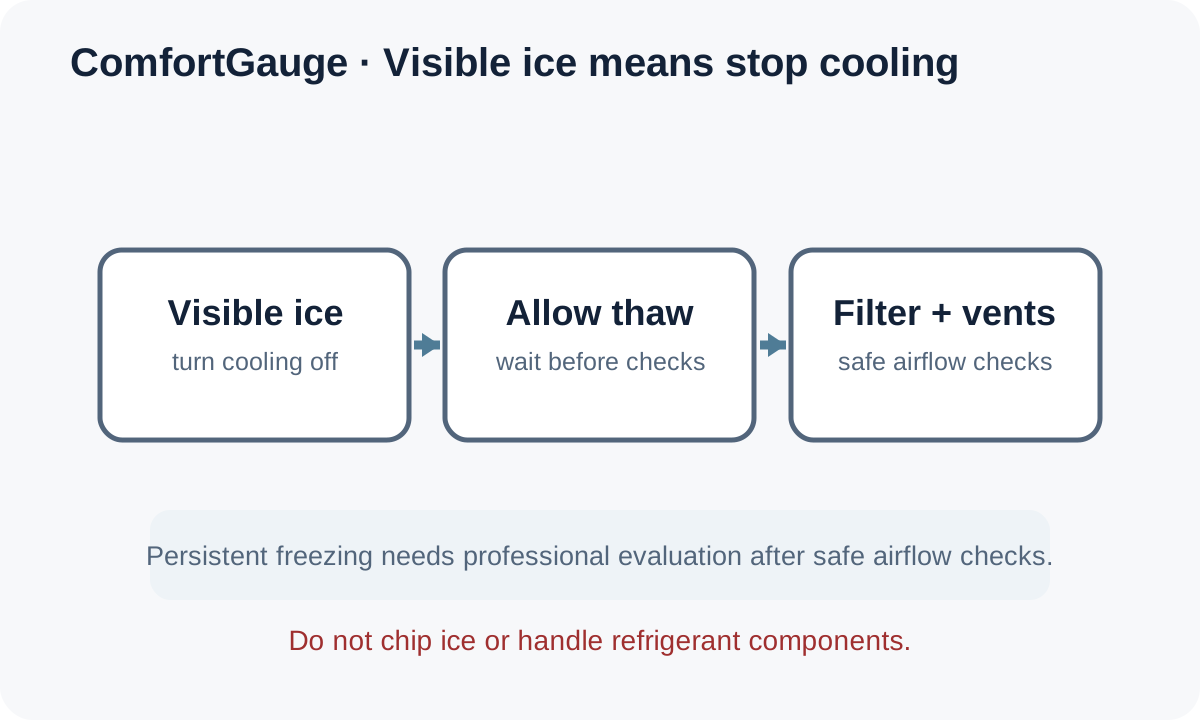
Immediate safety notes
- Turn cooling off while visible ice is present.
- Stop immediately for burning odor, smoke, arcing, gas odor, or a carbon-monoxide alarm.
Likely cause categories
ComfortGauge uses these reviewed cause categories as possibilities, not as a confirmed component diagnosis.
- airflow restriction
- refrigerant or coil issue
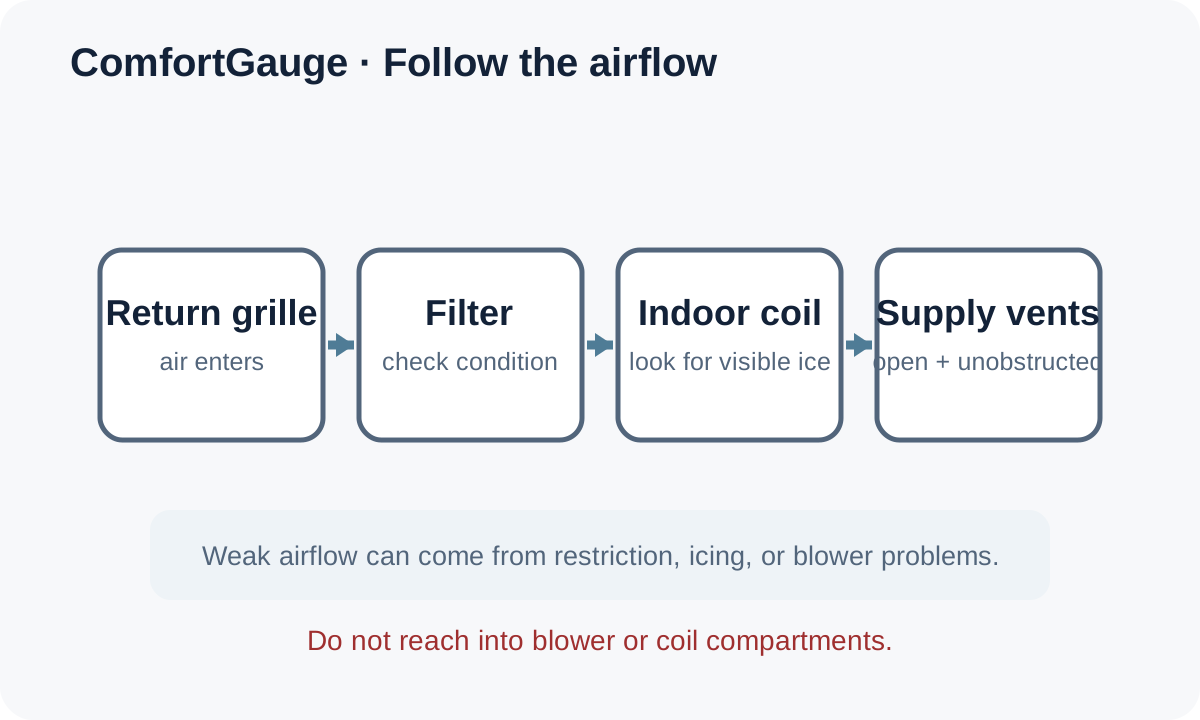
Safe checks you can make
- Let visible ice thaw before further observation.
- Check the filter and accessible vents for airflow restriction.
What not to do
- Do not chip or scrape ice from the coil.
- Do not add, recover, or release refrigerant.
Expected cost context
Reviewed national planning range: $250–$1,500.
This is a planning range, not a contractor quote. Dataset: ac-repair-cross-source-2026-v1.
Repair or replace context
System age, repair cost, repeat failures, comfort, and operating performance matter more together than any single symptom.
Compare repair versus replacement →Frequently asked questions
Can I run a frozen AC to make it cool faster?
No. Continuing cooling while ice is present can worsen the condition; turn cooling off and let the ice thaw.
Does a frozen AC always mean low refrigerant?
No. Airflow restrictions and coil or refrigerant conditions can produce similar icing symptoms.
How long should I wait before restarting a frozen AC?
Keep cooling off until visible ice has fully thawed; if freezing returns, stop and arrange professional evaluation.